
Disciplined calling for loan sales and collections teams
Financial services teams need consistent follow-up and a clear record of every customer interaction. CallTrackly captures calls automatically and keeps them auditable.
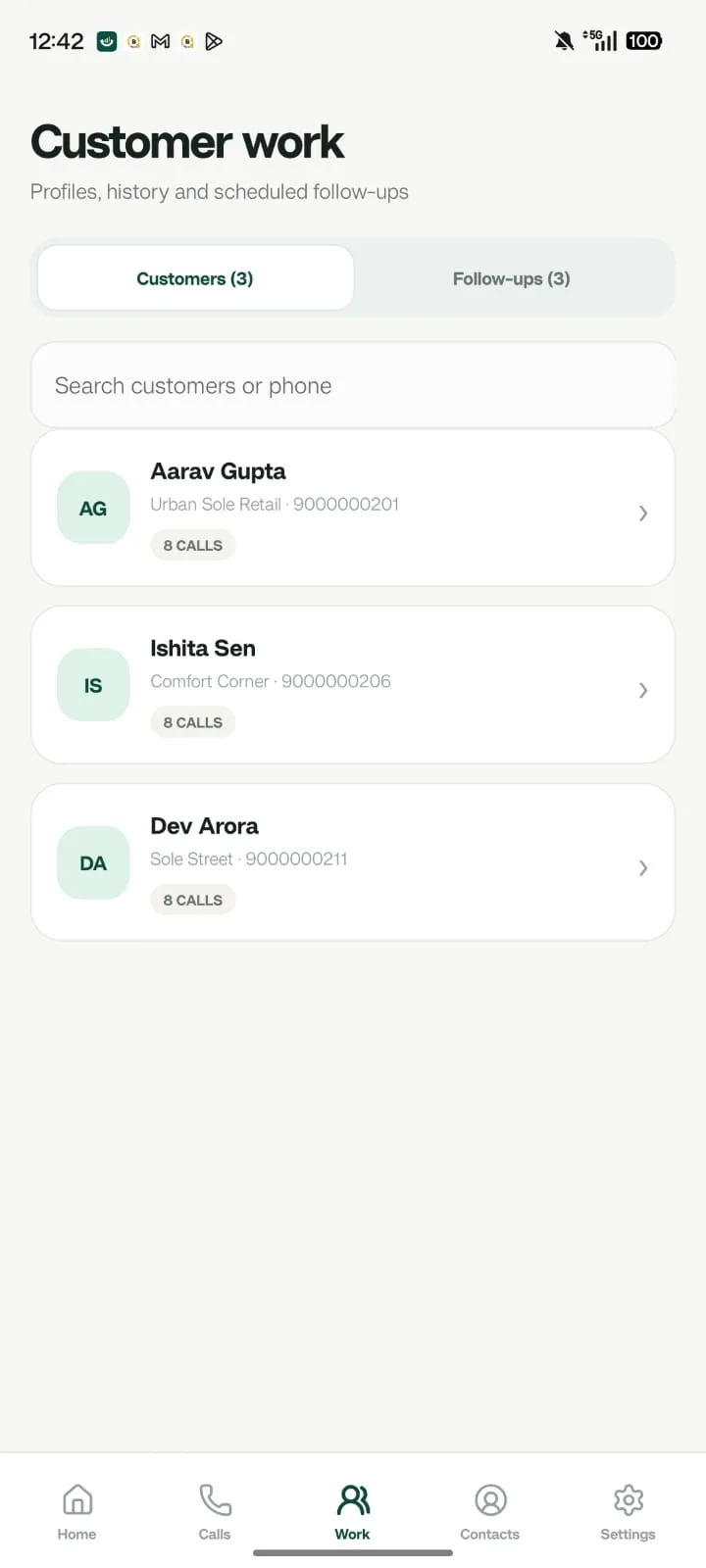
Where teams struggle today
Inconsistent follow-up
Document and payment follow-ups depend on each employee's own system.
Limited audit trail
When questions arise, there's no reliable record of who called whom and when.
Field teams on weak networks
Employees in the field often work with patchy connectivity.
How CallTrackly helps
- Every call captured with time, duration and direction, even offline
- Scheduled follow-ups with priorities and overdue alerts
- Consent-based recording sync with encryption and retention controls
- Role-based access and an audit history of administrative actions
Loan sales and collections workflows
Loan sales teams
- Track new loan enquiries and assigned owners
- Record eligibility, document and quotation outcomes
- Schedule applicant callbacks with priorities
- Review untouched and overdue enquiries
Collections teams
- Maintain a dated customer-contact history
- Record promised next actions in notes
- Review connected calls separately from attempts
- Restrict access using organization roles
CallTrackly organizes communication activity; it does not make lending, underwriting or collection decisions.
Metrics managers can review
- Outgoing attempts and connected conversations
- Unique applicants or customers contacted
- Total and average talk time
- Missed calls that still need a response
- Upcoming, completed and overdue follow-ups
- Activity by employee, day and hour
Keep calling activity separate from financial decisions
Loan and financial-services teams need a reliable history of customer contact, document requests and promised callbacks. CallTrackly supports that operational record through permitted business-call activity, notes, ownership and follow-ups. It does not assess creditworthiness, approve a loan, provide investment advice or determine collection eligibility. Those decisions belong to your regulated business process and the people authorized to make them.
Use the system to answer practical questions: who last contacted the customer, whether a conversation connected, which document was requested and when the next action is due. A connected call is not proof that a payment was made, a document was verified or a disclosure was understood. Keep the authoritative evidence in the appropriate system and record only the context your calling team needs to perform its work.
Create a disciplined document and callback workflow
Assign every enquiry or service task to an authorized employee. Record the customer’s stated requirement and an appropriate next step, such as explaining a document request or checking whether information has arrived. Choose a date and time for any agreed callback. Keep ownership current so a pending action does not remain attached to someone who is absent or no longer works with the organization.
Review the actual result after each conversation. A customer may request another contact time, need clarification or no longer require the service. Notes should be factual and proportionate. Avoid copying unnecessary identity documents, account credentials or other sensitive financial information into free-text fields. CallTrackly provides a communication workflow; it should not become an informal repository for every document involved in a financial transaction.
Use manager reviews to find service gaps
Start with device synchronization health, then review due work and unresolved missed calls. Check whether a customer was later reached before allocating another callback. Separate first-contact loan enquiries from existing-customer service and document follow-ups, because the workloads and expected conversation lengths differ. Compare equivalent date ranges and explain the organization timezone to the team.
At the weekly review, examine unique customers contacted, connected conversations, repeat attempts and overdue actions together. Ask employees to explain unusual patterns rather than drawing conclusions from a single call total. If your organization permits recording review, use authorized examples and allow the employee to explain the context. AI-generated summaries or coaching can assist a review when enabled, but they are not authoritative financial advice or a substitute for checking the conversation.
Apply clear access, retention and recording controls
Document which business phones and SIMs are included, who can review customer activity and which roles can access recordings. Explain the deployment to employees and handle customer notices and recording consent according to your organization’s applicable requirements. Call metadata and recording audio are separate data categories. Recording synchronization is optional and requires an available compatible file; basic reporting should not assume that audio exists for every call.
Use individual accounts, remove access promptly when an employee leaves and review administrative actions through the available audit history. Organization isolation and encrypted recording storage support the technical controls, while the business remains responsible for appropriate deployment and access decisions. Agree on retention periods and deletion handling before wider rollout. Contact the CallTrackly team for deployment-specific security and data-processing information rather than treating a general website statement as a complete regulatory assessment.
Run a measured pilot and document the evidence
Choose a small group of employees and use authorized test contacts to validate incoming, outgoing, missed and offline calling scenarios. Compare the phone history with the console and inspect employee identity, number matching, direction and timestamps. Create a document callback, reassign a test enquiry and verify how overdue work is displayed. Validate the employee departure and device reset process before relying on it during a real handover.
Record the baseline, reporting window, eligible workload and exclusions before evaluating results. Possible measures include the share of due tasks completed within the chosen period or unique missed-call customers reached later. Reconcile these with the underlying records and the organization’s own service outcomes. Any public case study should identify the period and definitions, include customer approval and distinguish observed results from assumptions. Neither a sample calculator nor an activity dashboard establishes recovered revenue by itself.
Frequently asked questions
Is there an audit history?
Yes. Security-sensitive administrative actions are recorded in an audit history in the console.
Can access be restricted?
Yes. Access is role-based, and devices can be revoked at any time.
Does CallTrackly make lending or collection decisions?
No. CallTrackly records authorized business-call activity and follow-up workflows. Your organization remains responsible for lending, collections, compliance and customer-treatment decisions.
Can a loan team use existing mobile numbers?
Yes. Supported Android users can continue calling from approved business SIMs while eligible activity synchronizes to the organization dashboard.